Third Test: A Bold Display Font for High-Impact Design
In the landscape of digital and print design, typography often serves as the silent narrator of a brand's story. It dictates pace, conveys emotion, and establishes authority before a single word is read. Among the myriad of typefaces available to designers today, Third Test has emerged as a distinctive option specifically engineered for scenarios demanding speed, power, or a combination of both. This article explores the characteristics of this font, evaluates its practical applications, and helps professionals determine if it fits their specific project requirements.
Understanding the Distinct Identity of Third Test
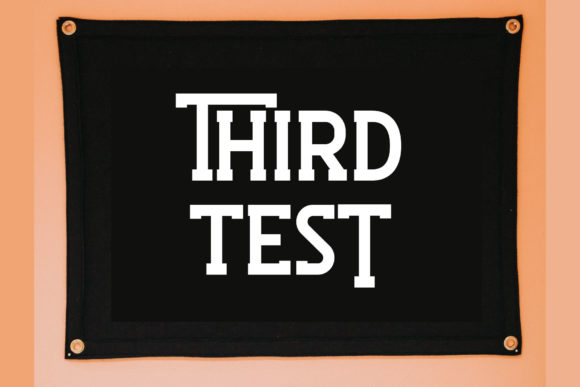
Third Test is not merely a standard sans-serif; it is a display font crafted with intentionality. Its visual language is rooted in boldness and adaptability, making it an ideal candidate for headlines, posters, and large-format graphics where immediate impact is necessary. The design philosophy behind Third Test leans heavily into the aesthetics of motion and strength. When a designer needs to communicate urgency or raw energy, the structural integrity of this font provides a solid foundation that resists looking weak or generic.
The distinctiveness of Third Test lies in its geometric precision combined with a slightly aggressive edge. Unlike traditional serif fonts that suggest heritage and stability, or soft rounded sans-serifs that imply approachability, Third Test occupies a unique space. It feels mechanical yet dynamic. This duality allows it to work effectively in contexts ranging from automotive branding to high-energy sports marketing. The font's ability to scale without losing legibility is a critical feature, ensuring that whether it appears on a massive billboard or a small mobile screen, the message remains clear and commanding.
Evaluating Performance Against Similar Options
When selecting a typeface, designers rarely choose in a vacuum. They are typically comparing options against established categories like industrial grotesques, extended slab serifs, or kinetic display faces. How does Third Test hold up in this comparison? In terms of weight and presence, it rivals heavy-duty industrial fonts, but it distinguishes itself through superior adaptability. Many robust display fonts suffer from being too rigid; they look great at 72 points but become illegible or visually overwhelming when scaled down. Third Test avoids this pitfall by maintaining a balanced stroke width that offers flexibility across different media.
Compared to more playful or experimental display fonts, Third Test offers a grounded professionalism. While some alternatives might prioritize novelty over function, leading to designs that feel dated quickly, Third Test focuses on enduring impact. It shares the "power" aesthetic of certain brutalist styles but refines it for modern commercial use. This makes it a safer choice for brands that want to convey strength without alienating their audience with overly harsh or difficult-to-read letterforms. The tradeoff here is that it may lack the whimsical charm required for children's products or lifestyle blogs, but for sectors focused on performance, it excels.
Strengths and Functional Tradeoffs
Every typographic tool comes with inherent strengths and limitations. Understanding these factors is crucial for making an informed decision. The primary strength of Third Test is its confidence. When applied correctly, it commands attention immediately. This makes it highly effective for call-to-action buttons, event headers, and promotional materials where the goal is to stop the user's scroll or catch their eye in a crowded environment.
- Visual Impact: The bold nature of the letters ensures high visibility even in cluttered layouts.
- Versatility: It adapts well to various color schemes and background textures, provided contrast is maintained.
- Emotional Resonance: It naturally evokes feelings of momentum and capability, aligning perfectly with themes of speed and technology.
However, there are tradeoffs to consider. Because Third Test is a display font, it is generally not suitable for long-form body text. Attempting to set paragraphs in this typeface can lead to reader fatigue due to the heavy visual weight of each character. Furthermore, its bold personality means it requires careful handling in minimalistic designs. If a layout relies on subtle elegance or quiet sophistication, Third Test might overpower the content rather than support it. Designers must be prepared to balance its intensity with ample negative space and lighter supporting typefaces.
Strategic Use Cases and Best-Fit Scenarios
To maximize the potential of Third Test, it is essential to match the font to the right context. The most natural fit for this typeface is in industries where physical movement or mechanical power is central to the value proposition. Consider a campaign for a new electric vehicle; the sharp angles and strong lines of Third Test mirror the aerodynamics and torque of the machine. Similarly, in fitness or extreme sports, the font reinforces the narrative of human endurance and athletic prowess.
Beyond physical products, Third Test is also effective in digital interfaces where hierarchy is paramount. In web design, using Third Test for section headers can create a clear visual roadmap, guiding users through content with a sense of purpose. For example, a landing page for a high-performance software tool could use Third Test to highlight key features, creating a sense of reliability and cutting-edge capability. The font's adaptability allows it to integrate seamlessly with other elements, provided the rest of the design respects its dominance.
- Automotive and Motorsports: Ideal for logos, race car liveries, and promotional banners emphasizing speed.
- Technology and Innovation: Perfect for tech startups showcasing powerful hardware or software solutions.
- Event Marketing: Excellent for concert posters, conference titles, and festival branding where energy is key.
- Sportswear and Apparel: Works well on packaging and advertising for gear designed for active lifestyles.
Decision Factors: When to Choose Third Test
Selecting a font is ultimately a strategic decision based on the goals of the project. If your objective is to communicate a message of authority, speed, and unyielding power, Third Test is likely the right choice. It allows you to add confidence to your creations, letting the typography do the heavy lifting in conveying your core values. However, if your project requires a tone of warmth, tradition, or delicate nuance, you may need to explore alternative options. There is no single "best" font, only the best font for a specific communication challenge.
It is also important to consider the technical environment. As with any custom display font, ensure that Third Test is properly licensed and compatible with the platforms where it will be displayed. Web embedding, mobile responsiveness, and print resolution all play a role in the final outcome. Fortunately, the adaptable nature of Third Test usually mitigates many technical hurdles, but testing across devices is always recommended to ensure the bold strokes render crisply.
Integrating Third Test into Your Workflow
For designers looking to expand their toolkit, adding Third Test represents a strategic addition rather than a replacement for existing fonts. It should be viewed as a specialized tool in a larger box. By pairing it with clean, neutral body fonts, you can create a sophisticated contrast that enhances readability while maintaining visual excitement. This layering technique allows the boldness of Third Test to shine without overwhelming the user experience.
The process of integrating this font involves experimentation. Try applying it to different weights, tracking, and kerning settings to find the optimal balance for your specific layout. You might find that tightening the spacing creates a more unified block of text, while looser spacing emphasizes individual letterforms for a more architectural feel. The goal is to let yourself be amazed by the outcome generated, as the font is designed to elevate the overall quality of the design.
In conclusion, Third Test stands out as a robust, adaptable, and bold display font capable of transforming ordinary designs into compelling visual statements. Whether you are working on a high-speed racing campaign, a tech product launch, or a dynamic social media graphic, this typeface offers the power and clarity needed to make an impression. By understanding its strengths, acknowledging its limitations, and applying it thoughtfully within a broader design system, professionals can leverage Third Test to achieve results that are both aesthetically striking and strategically sound.