Amigo: A Bold Display Font for High-Impact Visual Design
In the crowded landscape of digital and print design, selecting the right typeface is often the difference between a project that resonates and one that gets overlooked. Among the myriad options available to designers today, Amigo stands out as a distinct choice for those seeking immediate visual authority. This bold and thick lettered display font is not merely a collection of characters; it is a strategic asset designed to command attention and anchor creative compositions. Whether you are working on a poster, a brand identity, or a web banner, understanding the specific utility of Amigo can significantly elevate your workflow.
Distinguishing Characteristics of Amigo
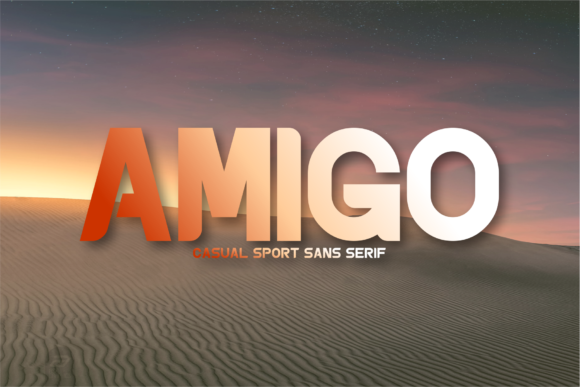
The primary allure of Amigo lies in its structural integrity and weight. Unlike standard sans-serif fonts that prioritize legibility at small sizes, Amigo is engineered for impact. Its thick letterforms create a solid presence that cuts through visual noise. When placed against a complex background or paired with delicate imagery, this font acts as a stabilizing force, ensuring that the core message remains the focal point.
This geometric yet robust construction gives Amigo a modern feel while retaining a certain approachable character, which justifies its name. The strokes are uniform in their thickness, avoiding the subtle variations found in humanist typefaces. This consistency allows the font to maintain its shape even when scaled down to medium sizes, though it truly shines when used large. For professionals looking to add a layer of confidence to their work without resorting to aggressive styling, Amigo offers a sophisticated middle ground.
The Role of Weight in Typography
Weight is a critical factor in typography that dictates hierarchy and tone. In many design systems, heavy weights are reserved for headlines, but they can sometimes appear too rigid or overwhelming if not chosen carefully. Amigo navigates this challenge by offering a balance between stiffness and flexibility. It is thick enough to be read instantly from a distance, making it ideal for outdoor advertising or large-format displays, yet it retains enough open counters (the negative space within letters) to remain readable in mid-sized applications.
This specific quality makes it an incredible asset to any designer's library. When a project requires a statement piece—a title that needs to stop the scroll or catch the eye of a passerby—Amigo provides the necessary heft without sacrificing aesthetic appeal. It transforms simple text into a visual element, allowing the words themselves to carry the design burden.
Evaluating Amigo Against Similar Options
When evaluating display fonts, designers often find themselves comparing options across different categories. Some alternatives focus on retro aesthetics, leaning heavily into vintage styles, while others prioritize extreme minimalism. Amigo occupies a unique space in this spectrum. It shares the boldness of industrial-style fonts but lacks the harsh, mechanical edges that can make such typefaces feel cold or unapproachable.
- Comparison with Retro Styles: While vintage fonts evoke nostalgia, Amigo feels contemporary. It does not rely on decorative serifs or distressed textures to make a statement. Instead, it relies on pure form and mass.
- Comparison with Minimalist Sans-Serifs: Standard minimalist fonts often struggle to grab attention in competitive environments. They require careful pairing with images to gain traction. Amigo, conversely, brings its own energy to the page, reducing the need for excessive graphic elements.
- Comparison with Decorative Scripts: Script fonts offer personality but often lack the clarity required for impactful headlines. Amigo provides the personality of a custom display font with the structural clarity of a geometric sans-serif.
This comparative advantage suggests that Amigo is particularly useful when a design needs to bridge the gap between stark modernism and expressive flair. It serves as a versatile tool that can adapt to various contexts without feeling out of place.
Strategic Applications and Best-Fit Scenarios
Understanding where to deploy a font like Amigo is just as important as knowing how to use it. There are specific scenarios where this typeface becomes the optimal choice, driving the success of the communication strategy. Recognizing these situations helps designers avoid misapplication and ensures the font serves its intended purpose effectively.
Brand Identity and Logos
In branding, the goal is often memorability. A logo needs to be recognizable at a glance. The bold nature of Amigo makes it an excellent candidate for logotypes where the name of the company or product needs to stand firm. Because the letters are thick and distinct, they hold up well when converted to monochrome or applied to merchandise. However, designers must consider the longevity of the style; while bold is timeless, overly trendy weights can date a brand quickly. Amigo strikes a balance that leans toward timelessness due to its clean geometry.
Editorial and Magazine Covers
Cover designs rely on typography to convey the theme of the issue before the reader even opens the publication. Here, Amigo excels at creating dramatic contrast. When paired with high-contrast photography, the font adds a layer of depth that enhances the overall composition. It allows editors to highlight key stories without cluttering the layout with additional graphics.
Digital Interfaces and Banners
In the digital realm, attention spans are fleeting. Web banners and social media ads must communicate value propositions in seconds. The high legibility of Amigo ensures that the call-to-action or headline is understood immediately. Its thick strokes render clearly on screens of varying resolutions, preventing the blurring issues that can plague thinner display fonts on lower-density monitors.
Navigating Tradeoffs and Limitations
No single typeface is a universal solution, and Amigo is no exception. While its strengths are significant, there are tradeoffs that professionals must acknowledge before committing to it for a long-term project. The most notable limitation is its versatility in body copy. Due to its heavy weight and distinctive character, Amigo is generally unsuitable for paragraphs of text. Using it for extended reading material can cause eye strain and reduce comprehension.
Additionally, the boldness of the font can become visually dominant if overused. In layouts that require a sense of lightness or airiness, Amigo might feel too oppressive. Designers must exercise restraint, using it sparingly to create focal points rather than filling every corner of a composition. This constraint actually encourages better design discipline, forcing creators to think critically about hierarchy and spacing.
Another consideration is the context of the audience. If the target demographic prefers understated elegance or traditional serif styles, Amigo might clash with their expectations. It is a font that projects confidence and energy, which may not align with brands aiming for subtlety or heritage. Therefore, the decision to use Amigo should always be grounded in the specific voice and values of the client or project.
Making the Final Decision
Choosing the right font ultimately comes down to the specific goals of the project. If the objective is to create a strong, memorable impression that demands attention, Amigo is likely the superior choice. Its ability to elevate any creation stems from its capacity to act as a visual anchor. However, if the project requires a more nuanced, delicate, or narrative-driven approach, other options in the market may serve better.
Designers should view Amigo as a powerful tool in their arsenal, one that is best utilized when the situation calls for boldness. By understanding its distinct characteristics and comparing it thoughtfully against alternatives, professionals can make informed decisions that enhance the quality of their work. Whether for a startup launch, a major campaign, or a personal creative endeavor, incorporating a font like Amigo can transform a standard layout into a compelling visual story.
Ultimately, the value of Amigo lies in its potential to turn ordinary text into extraordinary design. It is a font that respects the viewer's time by delivering clarity and impact simultaneously. For those willing to explore its capabilities and apply it with intention, it remains an invaluable resource for elevating the standard of their output.